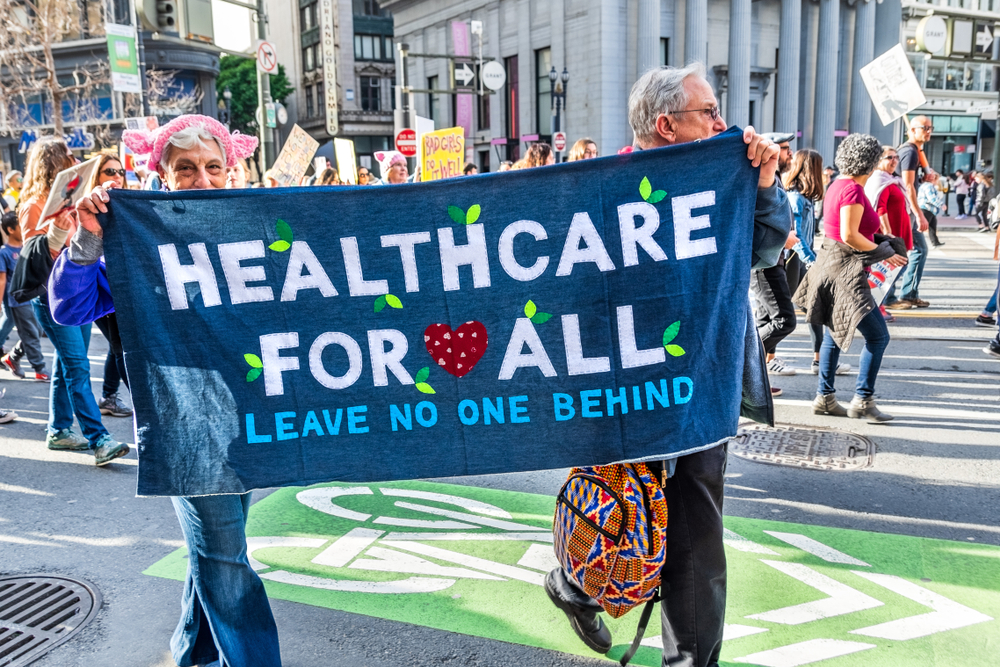
The conversation surrounding healthcare in the United States is one of the most polarized and enduring debates in American politics. While many proponents argue that a universal, government-funded system is a human right and a social necessity, a significant portion of the population, economists, and policymakers remain staunchly opposed.
The arguments against universal healthcare—often referred to as “Single-Payer” or “Medicare for All”—are not merely based on ideology. They are rooted in concerns regarding economic stability, the quality of medical innovation, personal liberty, and the efficiency of government bureaucracy. To understand the complexity of the American healthcare landscape, one must delve into the specific reasons why many believe a transition to a universal system would be a mistake for the nation.
The Economic Burden and Tax Implications
The most immediate and frequently cited argument against universal healthcare is the staggering cost. Transitioning the entire U.S. population to a government-funded system would require a massive infusion of capital. Estimates for the cost of “Medicare for All” over a ten-year period often range from $30 trillion to $40 trillion.
Opponents argue that such a budget would necessitate substantial tax increases for nearly every American citizen, not just the wealthy. In a country that prides itself on market-driven growth, critics fear that diverting such a large percentage of the Gross Domestic Product (GDP) into a government program would stifle economic activity. Furthermore, there are concerns about the national debt; with the U.S. already facing significant deficits, adding a massive healthcare entitlement could lead to long-term fiscal instability.
Impact on Innovation and Medical Research
The United States is currently the world leader in medical innovation, drug development, and advanced surgical techniques. Critics of universal healthcare argue that this is no accident. The profit motive inherent in the private insurance and pharmaceutical sectors provides the “engine” for research and development.
In a single-payer system, the government would likely implement price controls on drugs and medical devices to keep costs down. While this makes medicine cheaper for the consumer in the short term, opponents argue it destroys the incentive for pharmaceutical companies to invest billions in the “high-risk, high-reward” process of developing new treatments. They point to the fact that many countries with universal healthcare systems rely on the medical breakthroughs and technologies originally developed in the American private market. Without the U.S. private sector, global medical progress could slow to a crawl.
The Problem of Wait Times and Rationing
One of the most practical concerns raised by opponents is the issue of “rationed care.” In many countries with universal systems, such as Canada or the United Kingdom, patients often face long wait times for elective surgeries and specialist consultations.
The logic is simple: when a service becomes “free” at the point of use, demand skyrockets. If the supply of doctors and facilities does not increase at the same rate—or if government budgets cap the number of procedures allowed per year—the result is a queue. Opponents argue that the American system, while expensive, excels at providing rapid access to specialists and high-tech diagnostics (like MRIs and CT scans) that can take months to access in other nations. For many Americans, the ability to choose their doctor and receive immediate care is a non-negotiable aspect of their quality of life.
Bureaucracy and the Loss of Individual Choice
Central to the American identity is the concept of individual liberty and the right to choose. Critics of universal healthcare argue that a government-run system would eliminate the competition that drives quality and would force all citizens into a “one-size-fits-all” plan.
Under the current system, employers and individuals can choose from various private plans that suit their specific needs, whether they prioritize low premiums, specific hospital networks, or alternative therapies. Opponents fear that a federal bureaucracy would be far less efficient than private insurers. They argue that government agencies are notoriously slow to adapt, prone to “red tape,” and lack the competitive pressure to provide excellent customer service. The concern is that healthcare decisions would be moved from the doctor’s office to a government office, where bean-counters—not medical professionals—decide what treatments are “necessary.”
The Doctor Shortage and Provider Burnout
Another significant argument involves the people actually providing the care: doctors and nurses. Universal healthcare systems often rely on lower reimbursement rates to providers to remain financially viable.
Opponents suggest that if the U.S. were to slash reimbursement rates to match those of government-run systems, it could lead to a mass exodus of medical professionals. The cost of medical school in America is incredibly high, often leaving new doctors with hundreds of thousands of dollars in debt. If the potential for a high income is removed, fewer students may choose the arduous path of medicine. This could exacerbate the already growing doctor shortage, leading to even longer wait times and a decrease in the quality of care as providers become overworked and under-resourced.
Conclusion: Balancing Access and Excellence
The debate over universal healthcare in America is a clash of fundamental values. On one side is the desire for equitable access and the elimination of medical bankruptcy. On the other side—the focus of this article—are the concerns regarding economic sustainability, the preservation of innovation, and the protection of individual choice.
Critics of universal healthcare believe that the current system’s flaws should be addressed through market-based reforms, increased transparency, and targeted safety nets, rather than a total government takeover. They argue that the “American way” of healthcare has produced the most advanced medical landscape in history, and that dismantling the private infrastructure would risk losing the very quality and speed that many patients rely on in their most vulnerable moments.
Ultimately, the challenge for American policymakers is to find a middle ground that improves affordability without sacrificing the high standards of care and innovation that have defined the U.S. medical system for decades.